How to Wash Feather Pillows the Right Way: A Clear Guide
Mar 30th 2026
Feather pillows are comfortable and surprisingly durable when cared for properly. Over time, they collect sweat, body oils, skin cells, and dust mites, all of which flatten the loft, break down the filling, and create unpleasant odors. Washing them helps, but only if you do it the right way.
The good news is that you can safely wash feather pillows at home if you follow the right process. This usually involves checking the pillow label, preparing the pillow for washing, using a gentle detergent, choosing the correct washing machine settings, and rinsing thoroughly to remove any soap residue. Proper drying is equally important and typically includes low-heat tumble drying with dryer balls or clean tennis balls to restore the pillow’s fluff and prevent clumping.
Key Highlights:
- Feather pillows should be washed only once or twice a year at most, and using a quality pillow protector washed weekly can significantly extend their lifespan and maintain hygiene.
- Proper drying is critical: use low-heat tumble drying with dryer balls or clean towels to prevent clumping, restore loft, and avoid mold or unpleasant odors.
- Hand washing is a gentle alternative for delicate or older pillows, giving better control over cleaning without damaging the feathers or casing.
- Everyday maintenance, such as daily fluffing, occasional airing out, and avoiding going to bed with wet hair, helps preserve pillow shape, comfort, and cleanliness over time.
Should You Wash Feather Pillows at All?
The short answer is: as rarely as you reasonably can. Frequent washing strips the natural oils from feathers, making them brittle and sharp over time. It also puts the pillow casing under stress and creates repeated opportunities for moisture to get trapped inside.
Most experts recommend washing feather pillows once or twice a year at most. Between washes, a good pillow protector does the heavy lifting. If you use a quality protector consistently, you may only need to fully wash the pillow when there is a noticeable odor, visible staining, or a real hygiene concern.
How to Wash Memory Foam Pillows: Here Are the Details
Understanding the right preparation steps and supplies will help you clean the pillow safely without affecting its shape or support. Below, we’ll cover what you should do before washing, the materials you’ll need, and the step-by-step process to clean memory foam pillows properly.
Before You Wash: Two Critical Checks
1. Read the Care Label
The care label tells you exactly what your pillow can handle. Some premium feather pillows are dry-clean only or restrict machine washing to specific temperatures. If the label says dry clean, take it to a professional cleaner rather than risking it at home. Always trust the label.
2. Inspect Every Seam
Run your hands along all seams and corners of the pillow casing. Any small tear, loose thread, or thin spot will open further in the wash, releasing feathers into your machine. Fix damage with a needle and thread before washing. If the casing is genuinely worn out, skip washing and consider professional re-casing instead.
Important Warning
Do not skip the seam check. Even a tiny loose thread can become a major feather spill in the washing machine. A few minutes with a needle and thread before washing saves a major mess.
What You’ll Need to Wash Memory Foam Pillows
Equipment
- Washing machine (for removable pillow covers only)
- Large basin, bathtub, or sink for hand washing the foam
- Soft sponge or clean cloth for gentle spot cleaning
- Drying rack or well-ventilated space for air drying
Materials
- Mild liquid detergent (gentle and low-sudsing)
- Clean towels to absorb excess water after washing
How to Machine Wash Feather Pillows: The Steps
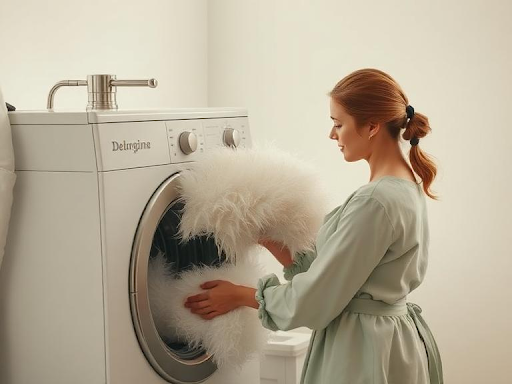
Once you have checked the care label and inspected the seams, here is how to machine wash feather pillows safely:
Remove all covers
Take off the pillowcase and any pillow protector. These should be washed separately with your regular bedding.
Load two pillows
Place one on each side of the drum for balance. If your machine has a centre agitator, stand the pillows vertically to reduce wear.
Add a small amount of mild detergent
Use less than you would for a normal load — roughly 1–2 teaspoons of liquid detergent. Excess soap leaves residue in the filling and causes clumping.
Select the gentlest settings
Use the delicate or gentle cycle with cool or lukewarm water. Hot water can shrink the casing fabric and degrade feather quality.
Run an extra rinse cycle
This removes any remaining detergent from deep inside the filling. Skipping this is a common reason pillows come out stiff or lumpy.
Gently press out excess water
Do not wring or twist the pillow. Press it gently between your hands or two clean towels before transferring it to the dryer.
How to Hand Wash Feather Pillows
Hand washing is a gentler alternative, especially for older pillows or delicate casings. It takes more effort but gives you more control over the process.
- Fill a large bathtub or basin with cool or lukewarm water.
- Add a small amount of mild liquid detergent and stir until it dissolves completely.
- Submerge the pillow and gently press and squeeze it repeatedly to move water through the filling.
- Drain the soapy water and refill the tub with clean water.
- Rinse thoroughly by pressing the pillow repeatedly until the water runs completely clear with no soap traces.
- Remove excess water by pressing the pillow firmly between two dry towels. Do not wring or twist.
After hand washing, move straight to drying. The longer the pillow sits damp, the greater the risk of mold developing inside the filling.
How to Dry Feather Pillows: The Most Critical Step
Drying is where feather pillows most commonly get damaged. If the pillow is not completely dry all the way through its core, the moisture trapped inside will cause mold and mildew. Once that happens, the pillow cannot be saved.
A feather pillow requires multiple drying cycles. Expect to run the dryer two to three times, roughly 45–60 minutes each, before the filling is fully dry.
Dryer Method (Recommended)
- Use low heat only. High heat damages feathers and can shrink the casing. Always use the low heat or air-dry setting — never high heat.
- Add dryer balls or a dry bath towel. Two or three wool dryer balls (or tennis balls in socks) help break up wet clumps inside the pillow as it tumbles.
- Check between cycles. Take the pillow out between each cycle and manually break apart any clumps you feel inside. Press to check for damp spots, especially in the centre.
- Start the next cycle immediately. Do not let the pillow cool down while still damp inside — mold can begin forming quickly. Restart the dryer right away.
- Keep going until completely dry. The pillow should feel light, fluffy, and dry throughout. If there is any clumping, heaviness, or coolness at the centre, run another cycle.
Air Drying (Slower Option)
You can air dry feather pillows outdoors on a sunny, breezy day. Lay the pillow flat on a clean surface or hang it on a line. Fluff and reshape it every 30 minutes, and rotate it to dry evenly. Air drying can take several hours — only bring the pillow inside once you are certain the filling is completely dry. Avoid air drying in humid conditions, as moisture in the air slows the process and increases mold risk.
Dryness Test
Press firmly on the centre of the pillow after each dryer cycle. If it feels cool, heavy, or has any clumps, it is not dry yet. Run another full cycle before using the pillow again. A properly dried pillow will feel light, uniformly fluffy, and warm throughout.
How to Handle Stains and Yellowing
Yellow staining on feather pillows is almost always caused by body oils, sweat, and moisture accumulating in the casing over time. It does not mean the pillow is ruined, but it is a sign that the protector is not doing its job.
For Light Stains
Spot treat the area before washing. Dab a small amount of mild detergent or a gentle stain remover onto the stain and let it sit for a few minutes before washing as normal. Do not rub vigorously, as this can push the stain deeper into the fabric.
For Heavy Yellowing
Soak the pillow briefly in cool water with a small amount of detergent before putting it in the machine. For stubborn odors, add half a cup of distilled white vinegar to the wash, it is a low-pH substance that neutralises smells without damaging feathers. Vinegar is much gentler on natural materials than alkaline cleaners.
What to Do If Your Feather Pillow Smells
A mild, earthy smell when a feather pillow first arrives or after a wash is normal and fades quickly once the pillow airs out. This comes from the natural oils in the feathers, it is not a defect.
- Place the pillow in the dryer on low heat for 20–30 minutes to drive out surface moisture
- If that does not help, wash the pillow using the steps above, then dry it thoroughly with multiple dryer cycles
- Sun drying after a wash can also help — natural sunlight has mild antibacterial properties
- If the smell persists after a full wash and complete drying, the filling has likely developed mold and the pillow should be replaced
How Often Should You Wash Feather Pillows?
Most feather pillows should be washed once every six to twelve months, depending on use. If you sleep on the pillow every night without a protector, you will need to wash it more often. If you use a good quality protector and wash it weekly with your bedding, you may be able to stretch to once a year. Washing your feather pillow less often comes down to one thing: protection. A pillow protector with a zipper creates a barrier against oils, sweat, and allergens. Washing that protector weekly means the pillow itself stays much cleaner for much longer.
Even with proper care, all pillows have a lifespan. Over time, your pillow may lose its loft or start causing discomfort, signaling that it’s time for replacing feather pillows to maintain proper support and hygiene.
Everyday Care Tips to Keep Feather Pillows Fresh Longer
- Washing your pillow less often is not laziness, it is actually better for the pillow. These simple habits between washes make a real difference:
- Use a pillow protector with a zipper. This is the single most effective habit. Wash the protector every week with your sheets.
- Fluff your pillow daily. Give it a good shake and squeeze in the morning to redistribute the filling and prevent it from compacting.
- Air it out occasionally. Once a month, remove the pillowcase and let the pillow air out for a few hours in a dry, breezy spot or on the low-heat dryer setting.
- Do not go to bed with wet hair. This is one of the biggest causes of yellowing and mold in feather pillows. Moisture from wet hair soaks into the filling much faster than sweat does.
- Maintaining a clean pillow is essential for better sleep quality. Many sleepers also benefit from specially designed sleep easy pillows that improve alignment and comfort throughout the night
- Avoid excessive heat. Do not leave feather pillows in direct sunlight for extended periods, and always dry on low heat. Both high heat and prolonged sun exposure degrade the natural oils in the feathers.
Sleep Easy Pillows – Upgrade Comfort!
Conclusion:
Proper care of feather pillows ensures they remain clean, fluffy, and supportive for years. Regular use of a pillow protector, careful washing, and thorough drying are essential steps to maintain hygiene and comfort. Knowing when it’s time to replace feather pillows helps prevent discomfort and keeps your sleep environment healthy.
Frequently Asked Questions
Can you machine wash feather pillows?
Yes, most feather pillows can be machine washed as long as the care label permits it and the casing has no tears. Use a gentle cycle, cool water, and a small amount of mild detergent. Always wash two at a time for balance.
How do you clean feather pillows without them going flat?
The key is drying them properly. Multiple low-heat dryer cycles with dryer balls will break up any clumps and restore loft. If a pillow comes out of one cycle still clumped, run it again immediately — do not let it cool down damp.
How do you launder feather pillows if you do not have a dryer?
Air drying is possible but takes much longer. Dry the pillow outdoors in a sunny, well-ventilated spot, fluffing it every 30 minutes. Make absolutely sure it is dry all the way through before using it again — mold risk increases significantly without a dryer.
Can you machine wash feather pillows in a top-loader?
Yes, but if the machine has a centre agitator, load the pillows vertically on either side of it to reduce wear on the feathers and casing. A front-loader without an agitator is better if you have the option — consider using a laundromat for best results.
How do you remove yellow stains from feather pillows?
Pre-treat the stain with a small amount of mild detergent before washing. For tougher yellowing, a brief soak in cool water with detergent helps. Adding half a cup of distilled white vinegar to the wash also neutralises odors and softens stains without damaging feathers.
What causes the smell in feather pillows after washing?
A mild earthy smell after washing is normal — it comes from the natural oils in the feathers and fades quickly as the pillow airs out. A persistent musty smell means the pillow was not dried completely. Run it through more low-heat dryer cycles until fully dry.
Should I use a pillow protector on feather pillows?
Absolutely. A pillow protector with a zipper is the single best thing you can do to extend the life of your feather pillow.
See more: The Best Pillows for Side Sleepers to discover which pillow features provide proper neck and shoulder support.